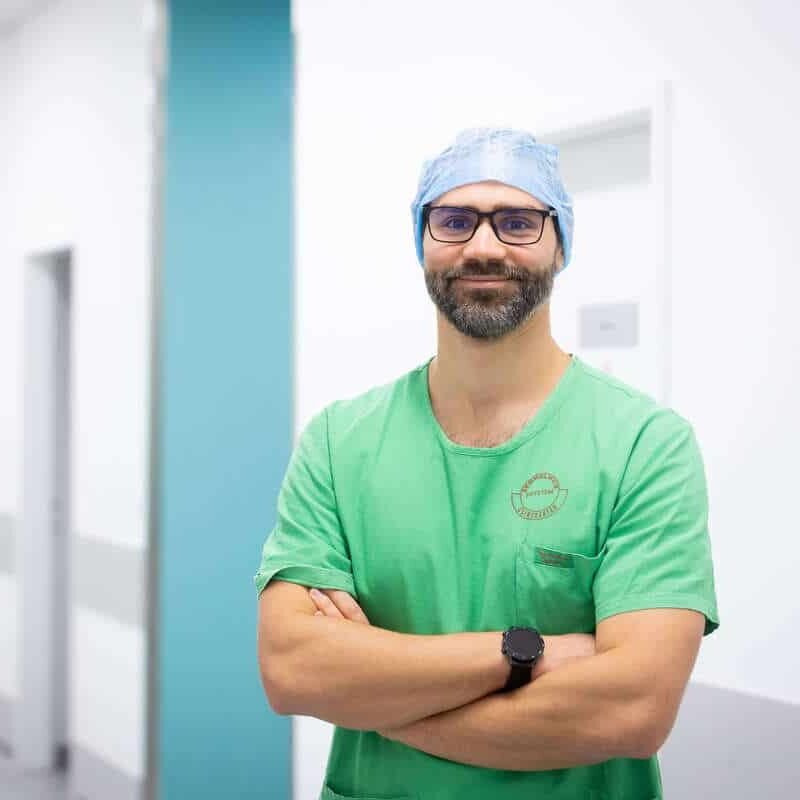
At Semmelweis University’s Városmajor Heart and Vascular Center, Zoltán Merkl works in silence, yet his role is critical. As a cardiovascular technician, or perfusionist, he operates heart-lung machines and ECMO systems that keep patients alive during heart and major vascular surgeries.
Merkl, 35, has spent eight years mastering this behind-the-scenes craft. His day begins and ends in the ICU, checking patients on ECMO support, and in the OR, he manages machines that temporarily replace the heart and lungs. “Attention and calmness are everything,” he says. “Patients’ lives literally depend on these devices.”
From preparing tubing and cannulas to monitoring oxygenation, blood gases, and vital functions during surgery, Merkl ensures the patient’s circulation remains stable while surgeons operate on a stopped heart. The work demands precision: one small misstep can have serious consequences.
ECMO support is equally critical outside the OR. The device oxygenates blood externally for patients with severe heart or lung failure. During the pandemic, Merkl’s team used ECMO to save the most critical COVID-19 patients—a period he describes as physically and mentally grueling.
Hungary currently has no formal perfusionist qualification, so Merkl trained as a nurse and learned on the job. Recognizing the need for specialists like him, Semmelweis University plans to launch a dedicated vocational program in September 2026, combining technical skills with biological knowledge.
Merkl chose this career for its mix of responsibility, biology, and technology. “Every stabilized patient, every small improvement—it all matters,” he says.
About the Author