BRUSSELS — After more than 500 days without a functioning regional government, the rector of Vrije Universiteit Brussel has issued a strong call for political cooperation, warning that continued stalemate could harm the Belgian capital’s future.
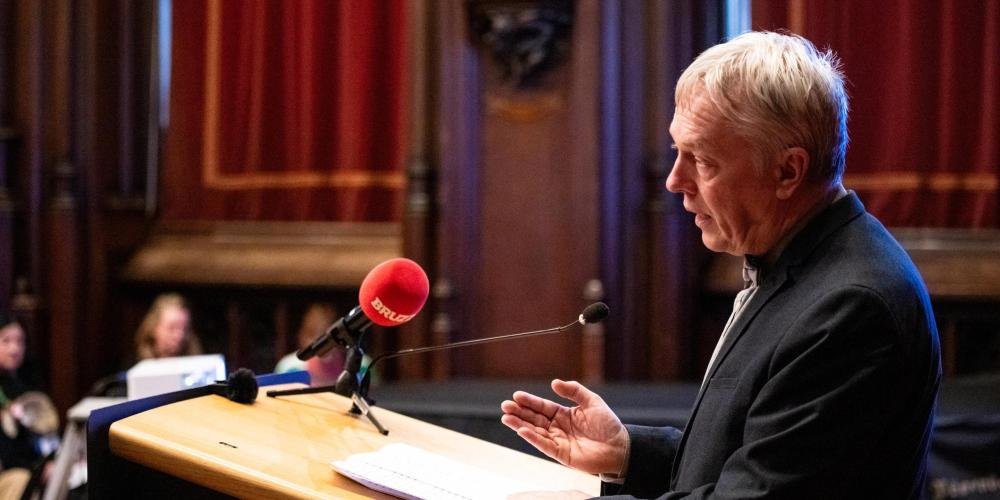
In an open letter addressed to negotiators, VUB Rector Jan Danckaert described the prolonged political impasse in Brussels as a “complex system” more puzzling than quantum mechanics — his own field as a physicist. However, he stressed that what may seem academically intriguing has real consequences for residents, students and institutions across the city.
Danckaert highlighted how the absence of a government has already cost Brussels more than a quarter of its legislative term. He warned that the paralysis undermines confidence among citizens, businesses, European institutions and rating agencies, potentially damaging the city’s global standing.
The rector also pointed to practical consequences for universities. Without a stable regional government, he said, efforts to address student housing shortages, develop innovation policies and collaborate on urban research have stalled. As an institution deeply embedded in the capital — with campuses in Ixelles and Jette — VUB relies heavily on regional cooperation to pursue projects in mobility, sustainability and smart city development.
Danckaert referenced the close partnership between VUB and its French-speaking sister institution, ULB, as an example of what political leaders could emulate. He recalled receiving applause at a recent academic event after suggesting that Brussels politics should learn from how the two universities collaborate across linguistic lines.
Beyond academia, the rector warned that political gridlock risks derailing broader ambitions, including major urban development initiatives and long-term planning. A government “without direction,” he wrote, breeds distrust and weakens the city’s ability to confront rising debt and social challenges.
Brussels, Danckaert argued, urgently needs unity and decisive leadership. “The future of Brussels depends on cooperation — in every sense,” he said, urging negotiators to form a government swiftly so the word “future” can finally be dropped from political discussions.
The appeal adds to growing pressure on political leaders to break the deadlock and restore governance in a region widely seen as the administrative heart of Europe.
source: Vrije Universiteit Brussel.
About the Author