Researchers at the ELTE Department of Ethology have discovered that a small group of dogs can learn the names of objects simply by overhearing conversations between humans. The findings, published in the journal Science, suggest that certain canine learning abilities may be closer to human language development than previously thought.
Many parents and dog owners are familiar with spelling out sensitive words—like “P-A-R-K”—to avoid triggering excitement. While toddlers around 1.5 years old are known to pick up new words by overhearing adults, this new study shows that some dogs can do something remarkably similar.
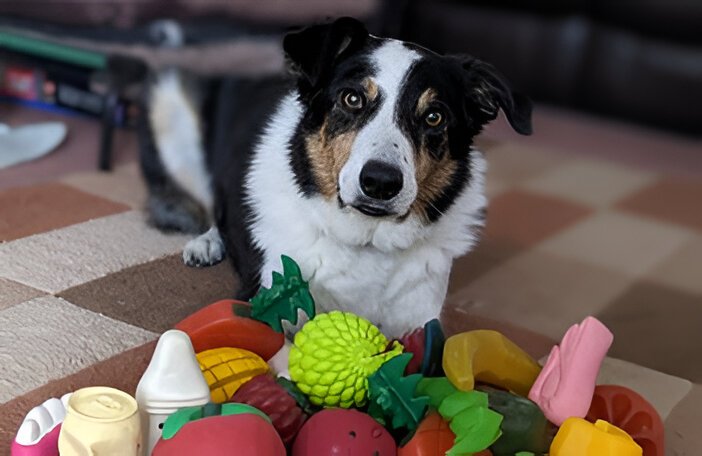
The research focused on so-called Gifted Word Learner (GWL) dogs, a rare group known for their ability to learn the names of dozens, sometimes even hundreds, of toys through play. Unlike typical command learning—such as “sit” or “down”—this skill involves associating specific words with specific objects.
“Our findings show that the socio-cognitive processes enabling word learning from overheard speech are not uniquely human,” said lead researcher Dr. Shany Dror, affiliated with ELTE and VetMedUni universities. According to the team, under the right conditions, some dogs demonstrate behaviors strikingly similar to those of young children.
In the first experiment, researchers tested ten Gifted dogs in two situations. In the “addressed” condition, owners introduced two new toys and repeatedly named them while interacting directly with the dog. In the “overheard” condition, the dogs simply watched as their owners discussed the toys with another person, without addressing the dog at all.
Each toy name was heard for a total of only eight minutes across several short sessions. Later, the toys were placed in another room, and the dogs were asked to retrieve them by name. Seven out of ten dogs successfully learned the new labels in both situations. The dogs showed 80% accuracy in the addressed condition and an impressive 100% accuracy when learning by overhearing.
In a second experiment, researchers added another challenge. The dogs were shown the toys, but the naming occurred after the toys were placed inside a bucket and out of sight. Despite this separation between seeing the object and hearing its name, most of the Gifted dogs still learned the correct labels.
“These findings suggest that GWL dogs can flexibly use a variety of mechanisms to learn new object labels,” said senior researcher Dr. Claudia Fugazza of ELTE University.
The study indicates that the ability to learn from overheard speech may rely on broader socio-cognitive skills shared across species, rather than being exclusively human. However, researchers emphasize that Gifted Word Learners are extremely rare, and their abilities likely result from a combination of individual predispositions and life experiences.
The research is part of the Genius Dog Challenge project, which aims to better understand the exceptional talents of these dogs. Owners who believe their pets may know multiple toy names are encouraged to contact the research team.
The findings not only deepen our understanding of canine cognition but also offer new insights into the evolutionary roots of language learning.
Source: ELTE University
About the Author