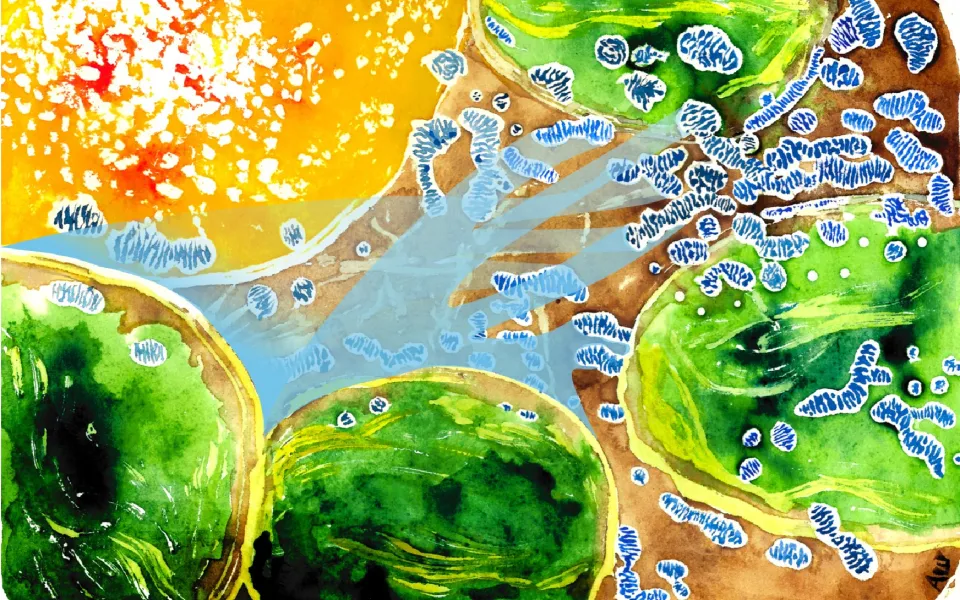
Researchers at University of Helsinki have discovered a previously unknown interaction between two key cellular structures in plants—mitochondria and chloroplasts. The study shows that mitochondria can draw molecular oxygen away from chloroplasts, influencing how photosynthesis and stress responses function inside plant cells.Oxygen plays a crucial role in plant metabolism, growth, immunity, and stress adaptation. While chloroplasts produce oxygen during photosynthesis and mitochondria consume it during respiration, scientists previously knew little about how oxygen moves between these two organelles within plant tissues.Using genetically modified Arabidopsis thaliana plants with mitochondrial defects, the research team observed that increased mitochondrial respiration significantly reduced oxygen levels inside plant tissues. This oxygen consumption affected the chloroplasts, making them resistant to a chemical called methyl viologen, which normally transfers electrons to oxygen and creates reactive oxygen species.Further experiments under low-oxygen conditions confirmed that the chemical reaction slowed dramatically due to the reduced oxygen availability. The findings suggest that mitochondria can effectively “drain” oxygen from chloroplasts during stress conditions, altering photosynthesis and the production of reactive oxygen species.The discovery provides new insights into how plants regulate internal oxygen levels and adjust their metabolism when facing environmental stress. Scientists say the findings may help improve methods for studying plant physiology and could contribute to the development of more resilient crop varieties in the future.
Source: University of Helsinki
About the Author