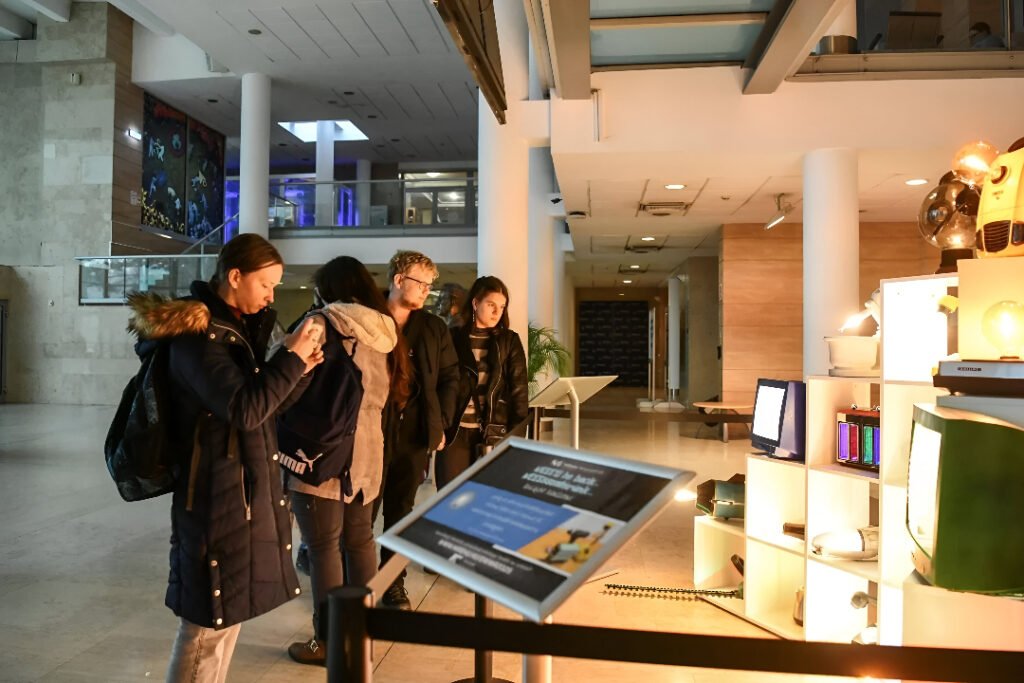
As part of European Waste Reduction Week, the Institute of Raw Material Preparation and Environmental Technology at the University of Miskolc organized an interactive exhibition titled “E-waste in a new light.” From a student’s perspective, the event offered more than just information—it provided a new way of thinking about the electronic devices we use every day.
Electronic waste is becoming an increasingly serious global problem. Because of their complex structure, discarded devices are difficult to process properly and may contain hazardous substances. At the same time, they include valuable materials such as copper, gold, silver, and rare earth elements. Learning about this dual nature of e-waste—both harmful and valuable—was one of the most striking aspects of the exhibition.
A central element of the program was MiReHu Kft.’s traveling exhibition “RElight,” which demonstrated in a visual and engaging way how used light sources and electronic devices can be recycled and given new life. For many visitors, including myself, it was surprising to see how advanced and precise these recycling processes are.
The interactive demonstrations made the experience even more engaging. Visitors could examine LED chips and LCD glass under a microscope and observe the operation of magnetic and eddy current separation equipment used in waste treatment. These hands-on elements helped make complex technological processes easier to understand.
Dr. Sándor Nagy, Director of the institute, delivered a lecture on conscious material use and the possibilities of waste recycling. He emphasized that sustainability is not only a responsibility of industries and institutions but also of individuals. His talk encouraged students to think about how everyday choices can contribute to a more sustainable future.
Overall, the RElight ME event highlighted the importance of recycling not only from an environmental perspective but also from an economic and technological one. For students, it served as a reminder that innovation and responsibility can go hand in hand when addressing global challenges like electronic waste.
Source: University of Miskolc
About the Author