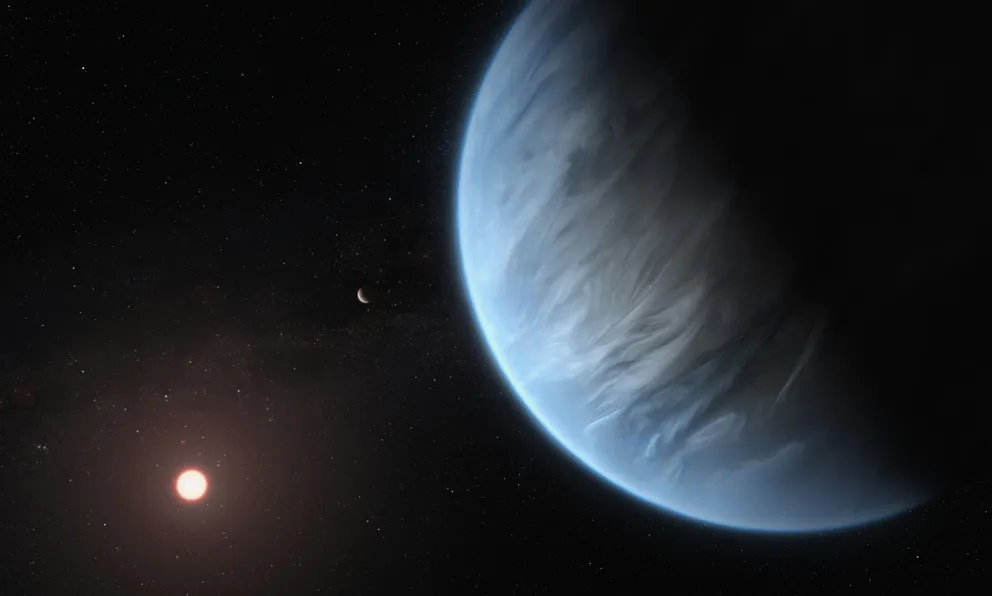
An international research team including scientists from University of Innsbruck has proposed a new method to study Earth-like exoplanets by combining a powerful ground-based telescope with a space-based “sunshade.” The concept aims to block the intense light from distant stars, making it easier to observe faint planets orbiting them.According to the study, the proposed sunshade would be a 99-metre-wide flower-shaped structure placed about 200,000 kilometres from Earth. Its petal-shaped edges would reduce light diffraction, allowing telescopes on Earth to detect the faint light coming from nearby exoplanets.When used with advanced telescopes such as the Extremely Large Telescope, the system could help scientists analyze the atmospheres of Earth-like planets. Researchers say the method could potentially detect molecules such as water and oxygen, which are considered important indicators of possible life.Following promising feasibility results, the research team plans to develop a strategic roadmap for the project. If supported by international space agencies like NASA and European Space Agency, the concept could become a major long-term mission, with possible implementation beginning around 2045.
Source:University of Innsbruck
About the Author