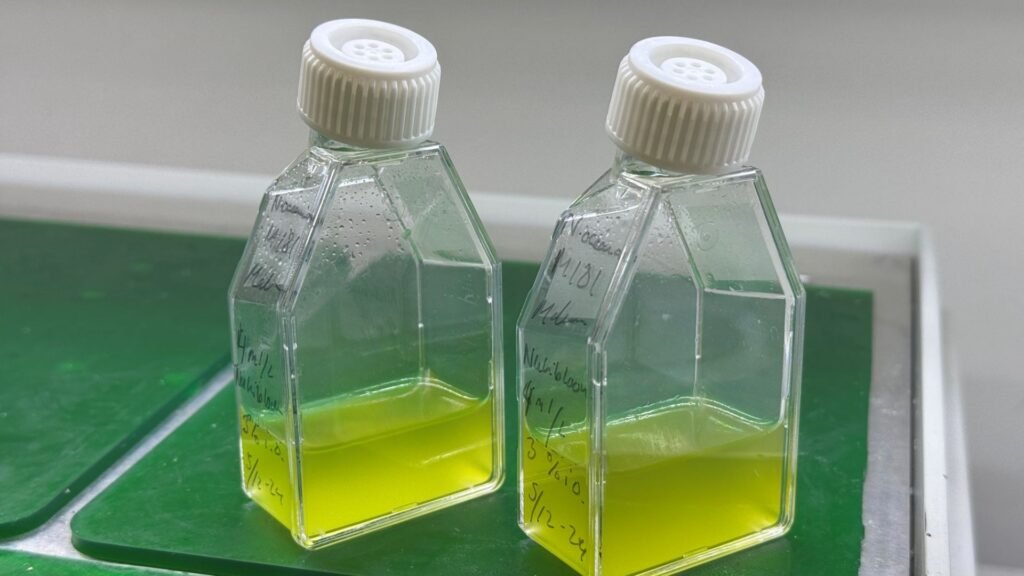
Denmark | Researchers at Technical University of Denmark are investigating how marine microalgae can provide essential nutrients, particularly vitamin D, in a sustainable and non-animal-based way.The study focuses on Nannochloropsis oceanica, a microscopic algae rich in protein, omega-3 fatty acids, and vitamins K2 and D3. Vitamin D3 is especially significant, as it is typically found in animal-based foods and is more efficiently utilized by the human body compared to other forms.This research could offer a viable alternative to conventional vitamin D supplements, which are often derived from animal sources such as sheep’s wool, making it particularly relevant for individuals following plant-based diets.The cultivation method also supports sustainability goals. The microalgae can be grown indoors using saltwater, eliminating competition for freshwater and agricultural land while reducing environmental impact.Despite its promise, the innovation is still in development. The algae must pass food approval regulations, and its tough cellular structure requires processing to ensure proper nutrient absorption.Researchers remain optimistic that with further development, microalgae could become a key component in future sustainable nutrition systems.
Source: Technical University of Denmark
#WordMain #StudentNewsPortal #Europe #studentnews
About the Author