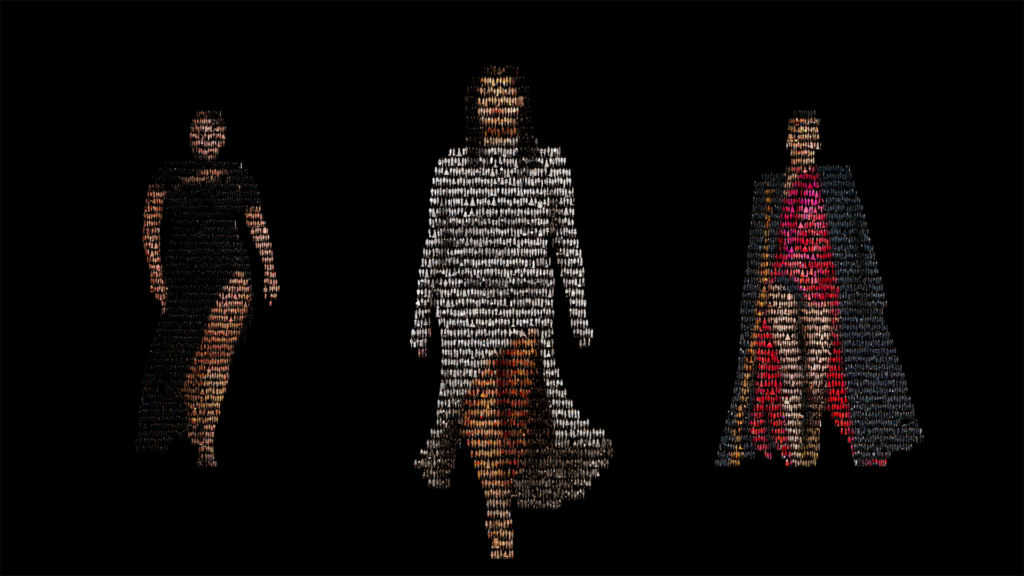
Denmark | A massive data science study analyzing nearly 800,000 fashion images from 2000 to 2024 reveals that despite a visible rise in diversity, the industry’s core female body ideal has remained completely unchanged for a quarter of a century. Utilizing advanced computer vision artificial intelligence, network analysis, and clinical health data, researchers tracked the evolution of model body sizes across runways, advertisements, and magazine covers.The findings uncover a distinct structural paradox: while inclusion has expanded at the absolute margins, the mathematical average or “normative center” of fashion modeling remains exceptionally thin and static, maintaining a waist measurement around 60 cm and an 18% body fat percentage. In stark contrast, public health registry data for the average woman in the same age demographic shows a waist size of 88 cm and a 37% body fat percentage. This indicates that the gap between media representation and biological reality is widening. Additionally, the study highlighted an intersectional burden within the industry: non-white models are 4.5 times more likely to be classified as plus-size, showing that multiple diversity checkmarks are frequently concentrated within the same small pool of individuals. Finally, the historical data suggests that strict, institutional BMI thresholds—such as those implemented in Milan—were significantly more effective at reducing the exposure of extremely thin body types than softer regulatory approaches based on flexible medical certificates.
Source: Danmarks Tekniske Universitet
#WordMain #StudentNewsPortal #Europe #studentnews
About the Author