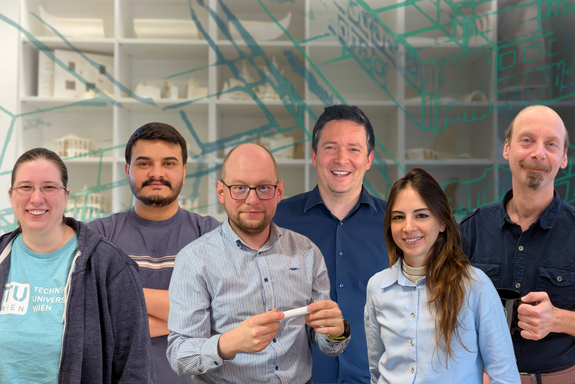
Austria | A breakthrough technology developed by TU Wien is enabling scientists to detect extremely small amounts of environmental pollutants in just minutes.The innovation uses nanomembranes combined with infrared light to identify substances at nano- and picogram levels, significantly outperforming traditional detection methods. What once required days or even weeks of analysis can now be completed in as little as 15 to 45 minutes.Developed in collaboration with the spin-off company Invisible-Light Labs, the technology—commercially known as EMILIE—has already proven effective in real-world conditions. It can analyze both air and water samples, detecting fine particles and nanoparticles with high precision.The method works by capturing particles on a tiny membrane and exposing them to infrared light. This causes slight temperature changes that alter the membrane’s vibrations, allowing researchers to accurately identify the chemical composition of even the smallest traces.The sensor has been successfully used in diverse settings, from urban pollution monitoring to studies in remote polar regions. It can even detect microscopic traces of materials, such as nylon particles released from a tea bag into a tiny amount of liquid.Researchers say the technology marks a major step forward in environmental analysis and could play a key role in improving pollution monitoring and supporting global environmental protection efforts.
Source: TU Wien
#WordMain #StudentNewsPortal #Europe #studentnews
About the Author