Sweden | April 1 2026
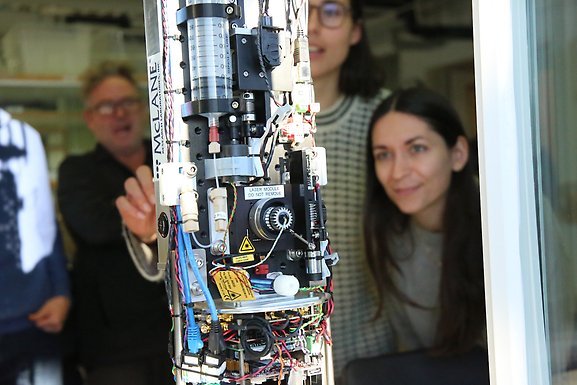
Stockholm University has introduced an advanced robotic microscope system at its Baltic Sea Centre to enhance the study of marine microorganisms and climate-related processes.The new device, known as an Imaging FlowCytobot, is an autonomous submersible microscope capable of continuously sampling seawater, capturing high-resolution images, and counting plankton cells. Installed at the Askö Laboratory, the system can produce up to 30000 images per hour, offering unprecedented insights into phytoplankton communities.Researchers highlighted that the technology integrates machine learning to automatically classify marine organisms, allowing near real-time monitoring of ocean ecosystems. This innovation significantly improves the ability to track changes in plankton populations, which play a crucial role in nutrient cycles and climate regulation.The project also connects biological observations with environmental data, including greenhouse gas emissions and atmospheric interactions. By combining genetic analysis and imaging data, scientists aim to better understand how microbial activity influences climate processes.Although the system requires careful calibration and large-scale data management, it represents a major step forward in marine research. Experts believe it will complement traditional methods and open new possibilities for studying ocean biodiversity and environmental change.
Source: Stockholm University
#WordMain #StudentNewsPortal #Europe #studentnews
About the Author